
Highlight Activities 2026: Hidden diversity of cave millipedes from Mainland Southeast Asia revealed by species delimitation and phylogenetic analysis, with a description of a new genus (Spirostreptida: Cambalopsidae).
ความหลากหลายที่ซ่อนอยู่ของกิ้งกือถ้ำจากเอเชียตะวันออกเฉียงใต้ภาคพื้นทวีป ซึ่งถูกเปิดเผยโดยการจัดขอบเขตชนิดพันธุ์และการวิเคราะห์สายสัมพันธ์ทางวิวัฒนาการ พร้อมการบรรยายลักษณะของสกุลใหม่ (Spirostreptida: Cambalopsidae)
Limestone caves in Southeast Asia—specifically across Thailand, Laos, Myanmar, and Cambodia—are home to a massive variety of animal life that remains largely unstudied.
In this research, scientists investigated cave-dwelling millipedes. Because many of these millipedes look nearly identical, it is incredibly difficult to tell species apart just by looking at them.
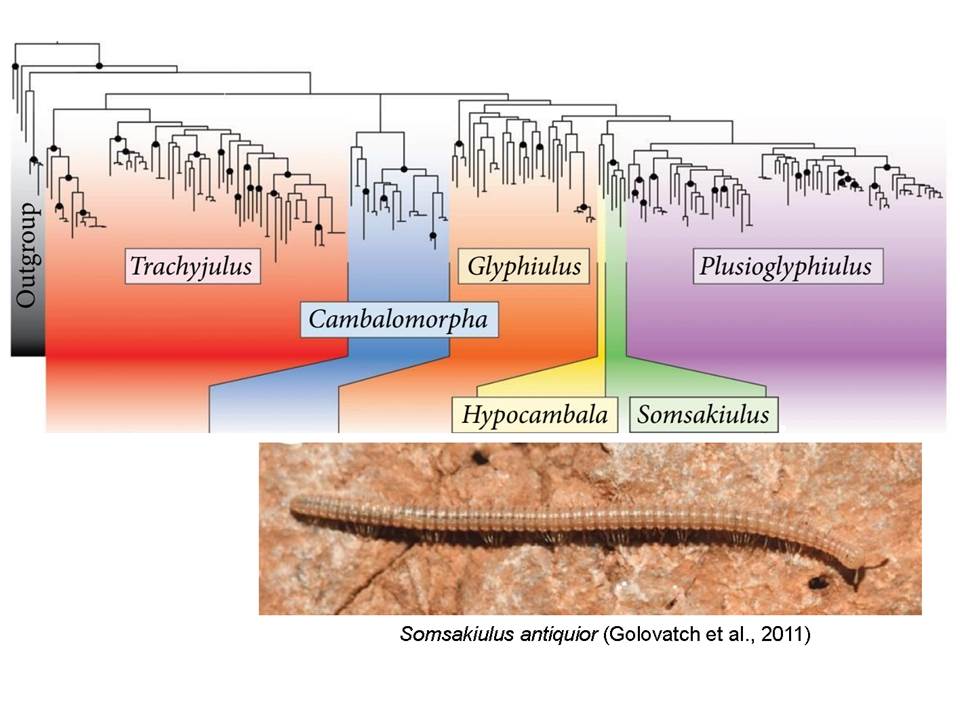
By combining physical examinations with DNA testing on 213 millipedes, the researchers discovered that the existing scientific family tree for these animals was incorrect. To fix this, they named an entirely new genus called Somsakiulus and revived an older historical name, Cambalomorpha.
Most importantly, the DNA revealed a huge amount of “hidden” diversity, proving there are significantly more distinct species living in these caves than physical appearances suggest. For example, one specific group of millipedes thought to contain only 25 species based on looks actually contains around 46 to 54 distinct species according to their DNA.
This study proves that relying on traditional physical features alone is no longer enough to identify these creatures. A combined approach of DNA analysis and detailed physical checks is essential for truly understanding and protecting these fragile cave ecosystems.
ถ้ำหินปูนในภูมิภาคเอเชียตะวันออกเฉียงใต้ (ครอบคลุมพื้นที่ประเทศไทย ลาว เมียนมา และกัมพูชา) เป็นแหล่งที่อยู่อาศัยของสิ่งมีชีวิตที่มีความหลากหลายสูงแต่ยังขาดการศึกษาที่เพียงพอ
ในงานวิจัยชิ้นนี้นักวิทยาศาสตร์ได้ทำการศึกษากิ้งกือถ้ำ ซึ่งปัญหาที่พบคือการใช้เพียงตาเปล่าดูรูปร่างลักษณะภายนอกนั้นแยกแยะชนิดของกิ้งกือได้ยากมาก เพราะพวกมันมีรูปร่างหน้าตาที่คล้ายคลึงกันมาก
นักวิจัยจึงได้นำเอาการตรวจ DNA มาใช้ร่วมกับการตรวจสอบลักษณะทางกายภาพของกิ้งกือจำนวน 213 ตัว
ผลลัพธ์ที่ได้ทำให้ต้องมีการจัดจำแนกในระดับสกุลของกิ้งกือกลุ่มนี้ใหม่ โดยมีการตั้งชื่อสกุลใหม่ขึ้นมา คือ Somsakiulus และมีการนำชื่อสกุลในอดีตคือ Cambalomorpha กลับมาใช้อีกครั้ง
ที่สำคัญที่สุดคือ ข้อมูลดีเอ็นเอได้เปิดเผยให้เห็น “ความหลากหลายที่ซ่อนอยู่” ซึ่งหมายความว่าในถ้ำเหล่านี้มีกิ้งกือชนิดใหม่ๆ ซ่อนอยู่อีกมากมายเกินกว่าที่คาดไว้ ตัวอย่างเช่น ในกิ้งกือกลุ่มหนึ่งที่หากดูด้วยตาเปล่าจะจำแนกได้เพียง 25 ชนิด แต่ผลดีเอ็นเอกลับชี้ว่าอาจมีสายพันธุ์ที่แตกต่างกันมากถึง 46–54 ชนิด
งานวิจัยนี้เป็นเครื่องยืนยันว่าเราไม่สามารถพึ่งพาแค่การดูอวัยวะหรือลักษณะภายนอกเพียงอย่างเดียวในการระบุชนิดสายพันธุ์ได้อีกต่อไป แต่จำเป็นต้องใช้ข้อมูลดีเอ็นเอควบคู่ไปด้วย ซึ่งความรู้ที่ถูกต้องแม่นยำเหล่านี้จะเป็นรากฐานสำคัญในการศึกษาและวางแผนอนุรักษ์ระบบนิเวศถ้ำที่เปราะบางต่อไปในอนาคต
🌏 งานวิจัยครั้งนี้สอดคล้องกับเป้าหมายการพัฒนาที่ยั่งยืน (SDGs)
เป้าหมายที่ 15. ปกป้อง ฟื้นฟู และสนับสนุนการใช้ระบบนิเวศบนบกอย่างยั่งยืน จัดการป่าไม้อย่างยั่งยืน ต่อสู้การกลายสภาพเป็นทะเลทราย หยุดการเสื่อมโทรมของที่ดินและฟื้นสภาพกลับมาใหม่ และหยุดการสูญเสียความหลากหลายทางชีวภาพ
เป้าหมายย่อย 15.4 สร้างหลักประกันว่าจะมีการอนุรักษ์ระบบนิเวศภูเขาและความหลากหลายทางชีวภาพของระบบนิเวศเหล่านั้น เพื่อจะเพิ่มพูนขีดความสามารถของระบบนิเวศเหล่านั้นที่จะให้ผลประโยชน์อันสำคัญต่อการพัฒนาที่ยั่งยืน ภายในปี 2573
📚 Publication
Seesamut, T., Likhitrakarn, N., Jirapatrasilp, P., Jeratthitikul, E., Sutcharit, C. 2026. Hidden diversity of cave millipedes from Mainland Southeast Asia revealed by species delimitation and phylogenetic analysis, with a description of a new genus (Spirostreptida: Cambalopsidae). Journal of Zoological Systematics and Evolutionary Research. 2026: 6387574. Doi: 10.1155/jzs/6387574.