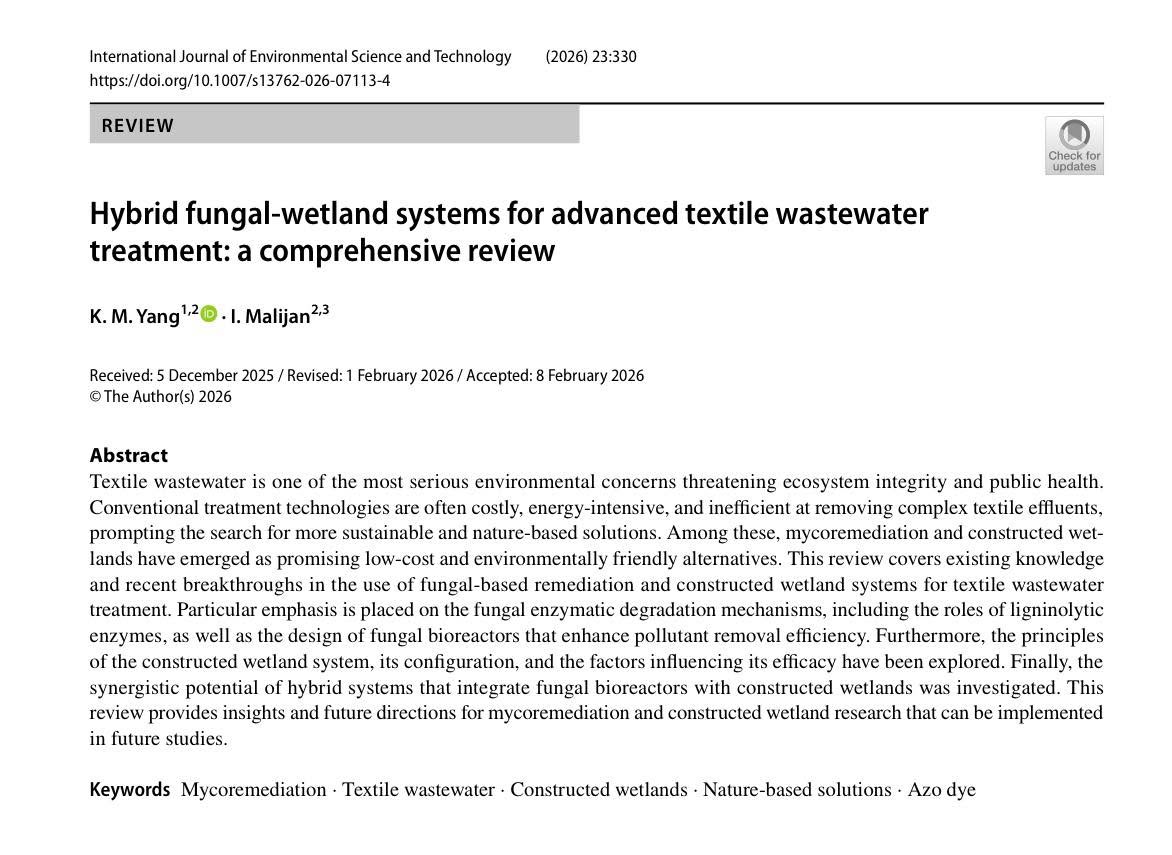
ขอแสดงความยินดีกับ นางสาวอินทิพร มลิจันทร์ นักศึกษาปริญญาโทและ Dr. Kwang-Mo Yang ศิษย์เก่าปริญญาเอกจากภาควิชาชีววิทยาที่ได้ตีพิมพ์บทความปริทัศน์รวบรวมและรวบยอดองค์ความรู้สำคัญเกี่ยวกับการจัดการน้ำเสียจากอุตสาหกรรมสิ่งทอ
ขอแสดงความยินดีกับ นางสาวอินทิพร มลิจันทร์ นักศึกษาปริญญาโท สาขาทรัพยากรชีวภาพและชีววิทยาสภาวะแวดล้อม และ ดร.กวางโม หยาง ศิษย์เก่าปริญญาเอกจากสาขาชีววิทยา ภาควิชาชีววิทยา คณะวิทยาศาสตร์ มหิดลที่ได้ตีพิมพ์บทความปริทัศน์รวบรวมและรวบยอดองค์ความรู้สำคัญเกี่ยวกับการจัดการน้ำเสียจากอุตสาหกรรมสิ่งทอ ซึ่งเป็นหนึ่งในความท้าทายด้านสิ่งแวดล้อมที่สำคัญของโลก งานทบทวนนี้สะท้อนให้เห็นถึงแนวทางใหม่ที่ผสานวิทยาศาสตร์ชีวภาพเข้ากับระบบนิเวศธรรมชาติ เพื่อสร้างทางเลือกการบำบัดน้ำเสียที่ยั่งยืนและเข้าถึงได้มากขึ้น
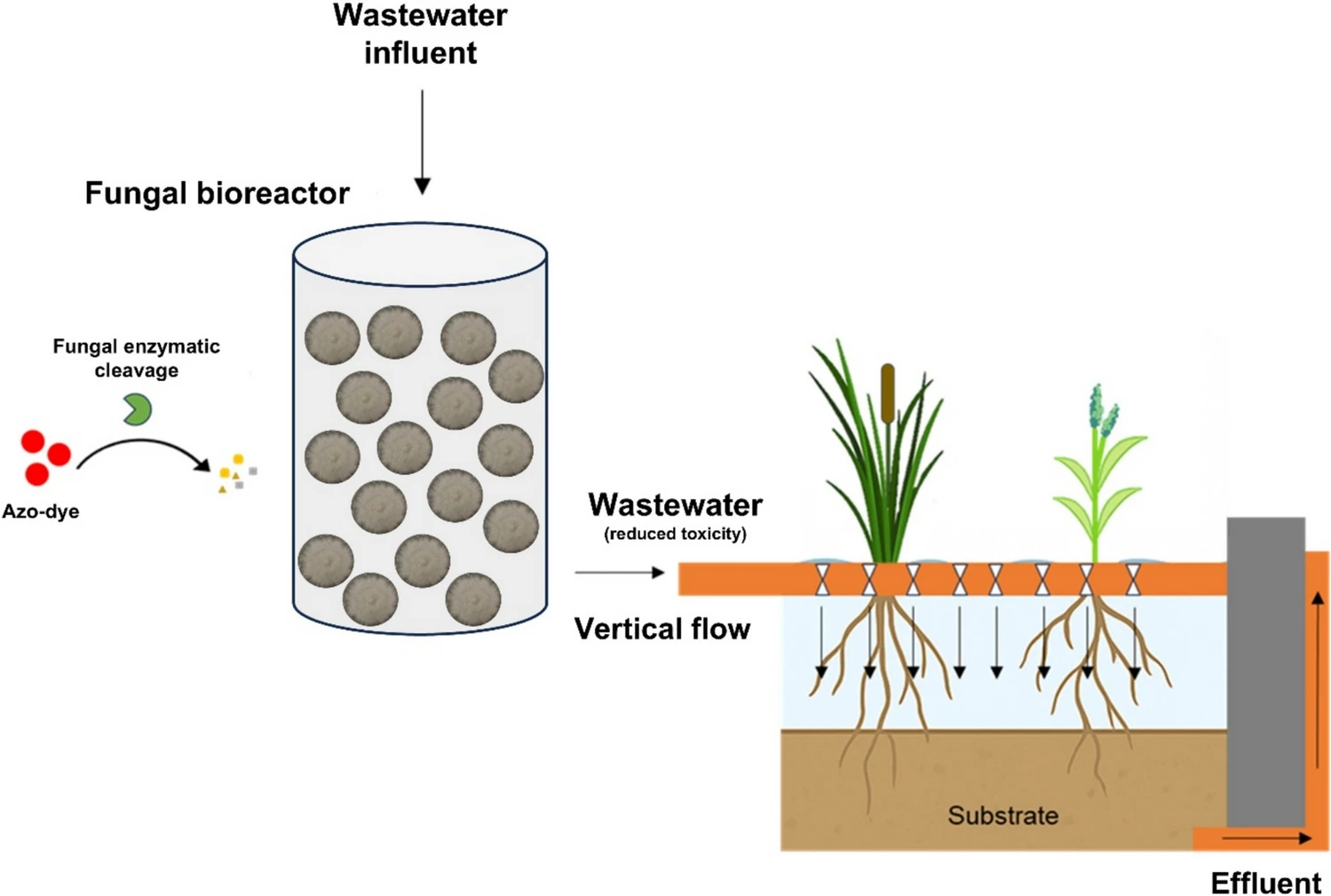
อีกทั้งยังชี้ให้เห็นว่า การใช้เชื้อราในการบำบัดมลพิษ (mycoremediation) เป็นเครื่องมือทางชีวภาพที่มีศักยภาพสูง เชื้อราสามารถผลิตเอนไซม์สำคัญ เช่น ligninolytic enzymes ที่ช่วยย่อยสลายสีย้อมและสารอินทรีย์ที่มีโครงสร้างซับซ้อนในน้ำเสียสิ่งทอได้อย่างมีประสิทธิภาพ นอกจากนี้ การพัฒนา ถังปฏิกรณ์ชีวภาพที่ใช้เชื้อรา (fungal bioreactor) ยังช่วยเพิ่มประสิทธิภาพในการกำจัดสารปนเปื้อนและทำให้กระบวนการบำบัดมีความเสถียรมากขึ้น
นอกจากนี้ ยังมีอีกหนึ่งแนวทางที่น่าสนใจ นั่นคือ ระบบพื้นที่ชุ่มน้ำประดิษฐ์ (constructed wetlands) ซึ่งเลียนแบบกลไกการฟื้นฟูตามธรรมชาติ โดยอาศัยพืช จุลินทรีย์ และวัสดุกรองในการช่วยลดมลพิษ ระบบนี้มีข้อดีคือใช้พลังงานต่ำ ต้นทุนไม่สูง และสามารถนำไปประยุกต์ใช้ได้ในหลายบริบท โดยเฉพาะในพื้นที่ที่ต้องการระบบบำบัดที่เป็นมิตรต่อสิ่งแวดล้อม และที่น่าสนใจที่สุดคือแนวคิดของ ระบบผสมผสานระหว่างเชื้อราและพื้นที่ชุ่มน้ำ ซึ่งช่วยเพิ่มประสิทธิภาพในการกำจัดมลพิษจากน้ำเสียสิ่งทอได้ดียิ่งขึ้น แนวทางนี้สะท้อนศักยภาพของ “ธรรมชาติเป็นผู้ช่วยบำบัด” ที่ทั้งประหยัด ยั่งยืน และสามารถขยายผลได้ในอนาคต
งานชิ้นนี้จึงไม่เพียงเป็นการทบทวนองค์ความรู้เท่านั้น แต่ยังเปิดประตูสู่การพัฒนานวัตกรรมสีเขียว ที่ช่วยปกป้องระบบนิเวศ ลดผลกระทบต่อสุขภาพมนุษย์ และสร้างแนวทางการจัดการน้ำเสียที่สมดุลระหว่างเทคโนโลยีกับธรรมชาติได้อย่างแท้จริง. 
Congratulations to Ms. Intiporn Malijan, a master’s student in the Bioresources and Environmental Biology International Program, Department of Biology, Faculty of Science, Mahidol University, and Dr. Kwang-Mo Yang, an alumnus from the Doctor of Philosophy (Biology) International Program, Department of Biology, Faculty of Science, Mahidol University, on the publication of their review article.
This work brings together important knowledge on the management of textile wastewater, one of the major environmental challenges facing the world today. The review highlights innovative approaches that combine biological science with natural ecosystem processes to create more sustainable and accessible wastewater treatment solutions.
One key focus of the article is mycoremediation, the use of fungi to remove pollutants. Certain fungi produce important enzymes, such as ligninolytic enzymes, that can effectively break down complex dye molecules and organic compounds commonly found in textile wastewater. The review also discusses the development of fungal bioreactors, which can enhance pollutant removal efficiency and improve the stability of the treatment process.
Another promising approach explored in the article is the use of constructed wetlands. These systems mimic natural purification processes by relying on plants, microorganisms, and filtration materials to remove contaminants from wastewater. Constructed wetlands require relatively low energy, have lower operational costs, and can be applied in a wide range of environmental settings, particularly where environmentally friendly treatment systems are needed.
Perhaps the most exciting perspective presented is the integration of fungal bioreactors with constructed wetland systems. This hybrid approach can significantly improve the removal of pollutants from textile wastewater, highlighting the powerful role of nature-based solutions.
Overall, this review not only summarizes current knowledge but also opens the door to green innovation, offering practical pathways to protect ecosystems, reduce risks to human health, and create more balanced wastewater treatment strategies that blend technology with nature. DOI: https://doi.org/10.1007/s13762-026-07113-4