
Highlight Activities 2026: Effects of chemical fertilizer application on soil properties, banana (Musa paradisiaca) yields, and soil microbiomes in a long-term cultivation field
RESEARCH HIGHLIGHT | งานวิจัยเด่น
Effects of chemical fertilizer application on soil properties, banana (Musa paradisiaca) yields, and soil microbiomes in a long-term cultivation field
━━━━━━━━━━━━━━━━━━━━━━━━━━━━
🔬 Research Highlight
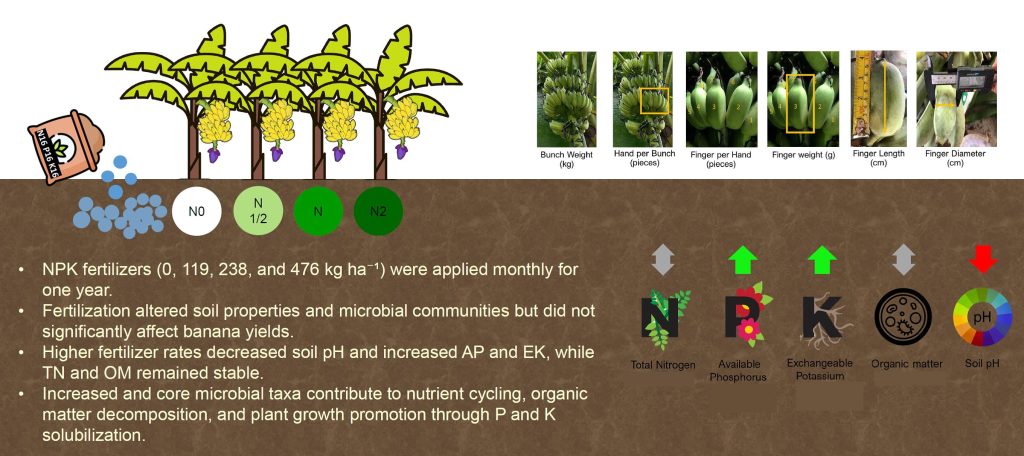
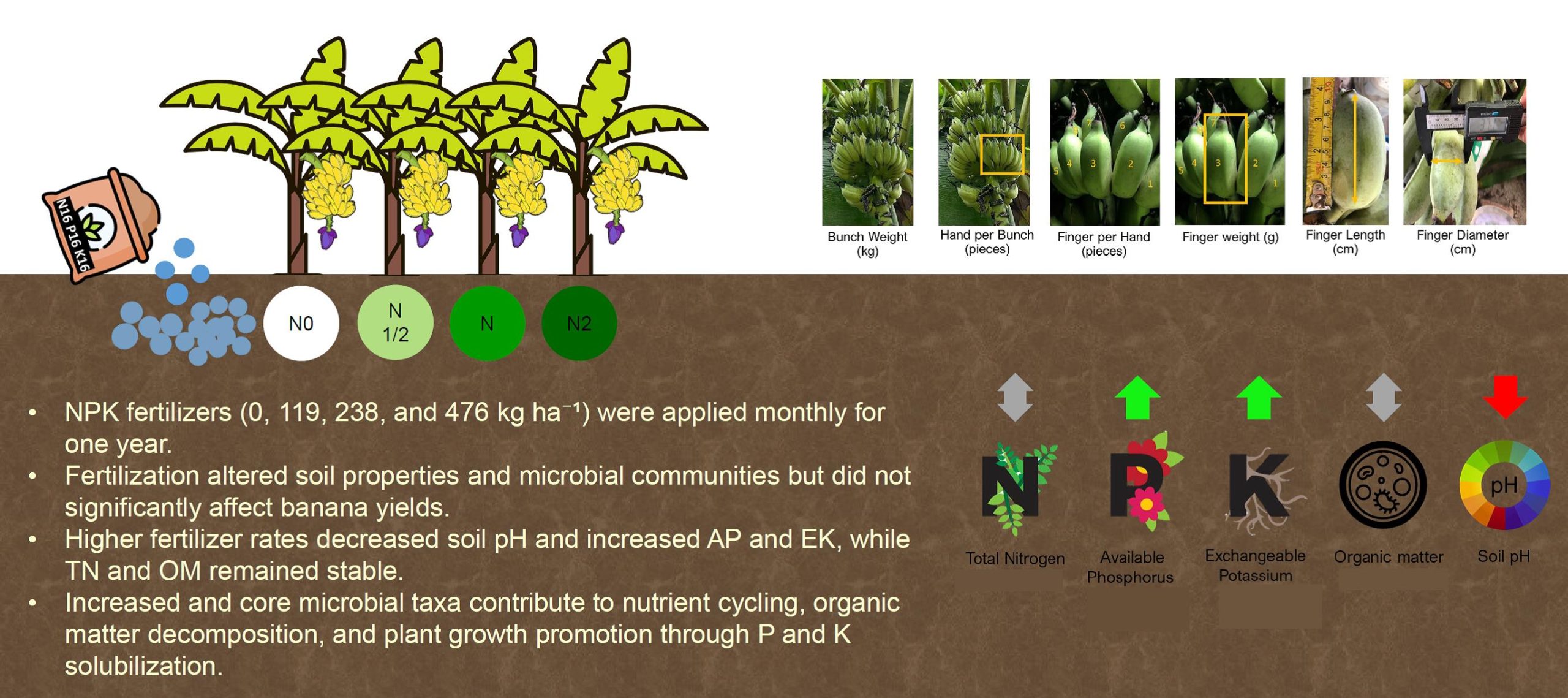
Chemical fertilizers are widely used in agriculture to support crop growth and meet the increasing demand for food. However, repeated fertilizer application can change soil conditions and affect microorganisms that play important roles in maintaining soil health and nutrient cycling. Understanding these changes is essential for developing more sustainable fertilizer management practices. This study investigated how different rates of chemical fertilizer application affect soil properties, banana production, and soil microbial communities in a long-term banana cultivation field. Four rates of NPK fertilizer (0, 119, 238, and 476 kg ha-1) were applied monthly over one year. The results showed that fertilizer application significantly changed soil properties and the composition of soil microbial communities but did not significantly affect banana yields. Higher fertilizer rates decreased soil pH, indicating increased soil acidity, while increasing the availability of phosphorus and potassium. In contrast, total nitrogen and organic matter remained relatively stable. Fertilizer application also influenced the abundance of several groups of soil bacteria associated with important processes, including nutrient cycling and plant growth promotion. Furthermore, the microbial community showed functional potential for processes involved in carbon, nitrogen, and sulfur cycling under low-oxygen conditions. Despite differences in fertilizer application rates, banana yields remained stable throughout the 10-month production period. This may partly reflect the accumulation of nutrients from repeated fertilizer inputs and the return of crop residues to the soil, which may have provided sufficient nutrients to support crop growth without additional fertilizer application during this period. Overall, the findings indicate that higher chemical fertilizer inputs do not necessarily result in increased banana yields. Instead, repeated fertilizer application can alter soil properties and microbial communities, with potential implications for long-term soil health. These findings highlight the importance of considering existing soil nutrient levels when determining fertilizer requirements. Adjusting fertilizer application rates to actual soil conditions could help maintain crop productivity, reduce unnecessary fertilizer inputs, and promote more sustainable banana production.
━━━━━━━━━━━━━━━━━━━━━━━━━━━━
🌍 Sustainable Development Goals (SDGs) เป้าหมายที่ 2, 12 และ 15
━━━━━━━━━━━━━━━━━━━━━━━━━━━━
📚 Reference
Pruksangkul S, Termsaithong T, Mhuantong W, Limpiyakorn T, Sonthiphand P. 2026. Effects of chemical fertilizer application on soil properties, banana (Musa paradisiaca) yields, and soil microbiomes in a long-term cultivation field. PeerJ 14:e21912 https://doi.org/10.7717/peerj.21912