
Highlight Activities 2026: Phylogenetic placement and reproductive mode of Corbicula regia (Venerida: Cyrenidae) bring new insights into systematics and evolution of Corbicula clams
🐚 RESEARCH HIGHLIGHT | งานวิจัยเด่น
🐚 Phylogenetic placement and reproductive mode of Corbicula regia (Venerida: Cyrenidae) bring new insights into systematics and evolution of Corbicula clams
🐚 สถานะทางวิวัฒนาการและรูปแบบการสืบพันธุ์ของ Corbicula regia (Venerida: Cyrenidae) ทำให้เกิดความรู้ใหม่ต่อการจัดจำแนกและวิวัฒนาการของหอยน้ำจืดสกุล Corbicula
━━━━━━━━━━━━━━━━━━━━━━━━━━━━
Research Highlight
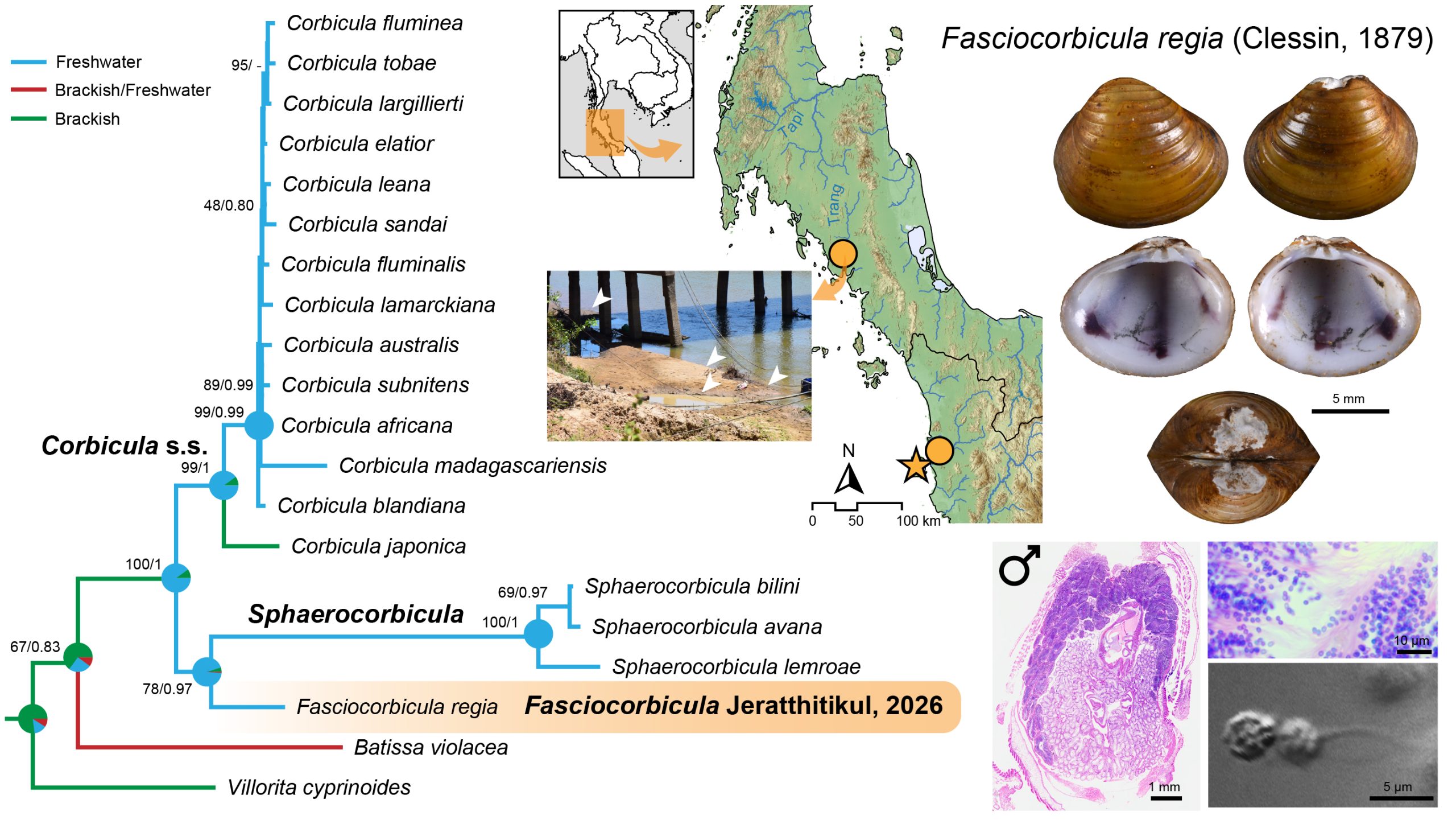
Recent scientific study sheds new light on Corbicula regia, an enigmatic species of basket clam originally discovered in Malaysia over a century ago. Having gone unrecorded for decades, living specimens were recently rediscovered in their original habitat in Penang, Malaysia, alongside a newly identified population in the Trang River of Southern Thailand. By employing multi-locus phylogenetic analysis, scientists revealed that C. regia forms a unique evolutionary lineage distinct from other Corbicula clams. This significant genetic divergence prompted the researchers to establish a completely distinct genus, Fasciocorbicula, resulting in the species being classified as Fasciocorbicula regia. Physically, this new genus is easily recognizable by its small, thick shell with prominent concentric ribs and, most notably, a distinctive pattern of five dark purple radial stripes on its inner surface. Beyond its appearance, the study thoroughly examined the clam’s reproductive biology, confirming that F. regia is strictly dioecious, meaning individuals are distinctly male or female. In stark contrast to many widely invasive Corbicula lineages which are hermaphroditic, clone themselves via androgenesis, and incubate their young in gills. Fasciocorbicula regia exhibits primitive, spherical-headed sperm with a single flagellum and releases its larvae without brooding. Finally, ancestral reconstructions suggest that these clams originated in Southeast Asia during the Early Cretaceous (104.2 million years ago). The findings also challenge long-held beliefs about how Corbicula colonized freshwater, indicating that the well-known brackish-water species C. japonica actually experienced an evolutionary reversal, moving back into brackish environments from a purely freshwater ancestor.
━━━━━━━━━━━━━━━━━━━━━━━━━━━━
การศึกษาวิจัย
การศึกษาวิจัยล่าสุดได้เปิดเผยข้อมูลใหม่ที่สำคัญเกี่ยวกับหอยน้ำจืด Corbicula regia ซึ่งเป็นชนิดหายากที่ถูกค้นพบครั้งแรกในประเทศมาเลเซียเมื่อกว่าหนึ่งศตวรรษที่ผ่านมา หลังจากที่ไม่มีการยืนยันการพบเห็นมาอย่างยาวนาน ล่าสุดนักวิจัยได้ค้นพบตัวอย่างที่มีชีวิตของหอยชนิดนี้อีกครั้งในแหล่งที่อยู่ที่เคยเจอในรัฐปีนัง ประเทศมาเลเซีย รวมถึงการค้นพบประชากรกลุ่มใหม่ในแม่น้ำตรัง ภาคใต้ของประเทศไทย. จากการวิเคราะห์ความสัมพันธ์ทางวิวัฒนาการระดับโมเลกุลของยีนหลายตำแหน่ง นักวิทยาศาสตร์พบว่า C. regia มีสายวิวัฒนาการที่แยกตัวออกห่างจากกลุ่มหอย Corbicula ชนิดอื่น ๆ อย่างชัดเจน ความแตกต่างทางพันธุกรรมที่มากพอนี้ทำให้นักวิจัยได้แยกออกมาเป็นสกุลใหม่ภายใต้ชื่อ Fasciocorbicula ส่งผลให้หอยชนิดนี้ได้รับการจัดจำแนกใหม่เป็น Fasciocorbicula regia ในด้านลักษณะทางกายภาพ สกุลใหม่นี้มีความโดดเด่นที่เปลือกขนาดเล็กและค่อนข้างหนา มีรอยหยักที่เปลือกด้านนอกอย่างที่ชัดเจน และที่สำคัญที่สุดคือมีลวดลายแถบสีม่วงเข้มในแนวรัศมีจำนวน 5 แถบปรากฏอยู่บนผิวด้านในของเปลือก นอกเหนือจากลักษณะภายนอกแล้ว การศึกษายังเจาะลึกถึงชีววิทยาการเจริญพันธุ์และพบว่า F. regia เป็นหอยที่มีการแยกเพศผู้และเพศเมียอย่างชัดเจน ซึ่งแตกต่างอย่างสิ้นเชิงจากหอย Corbicula ชนิดพันธุ์ต่างถิ่นรุกรานที่มักจะมีสองเพศในตัวเดียว สามารถสืบพันธุ์แบบโคลนนิ่งตัวเอง (androgenesis) และมีพฤติกรรมฟักตัวอ่อนในเหงือก แต่ F. regia กลับมีการสร้างสเปิร์มแบบโบราณที่มีหัวกลมและหางเดี่ยว รวมทั้งไม่มีการฟักตัวอ่อนในตัวแม่ การวิเคราะห์ประวัติศาสตร์วิวัฒนาการยังชี้ให้เห็นว่าหอยกลุ่มนี้มีจุดกำเนิดในภูมิภาคเอเชียตะวันออกเฉียงใต้ตั้งแต่ช่วงต้นยุคครีเทเชียส หรือประมาณ 104.2 ล้านปีก่อน ผลการค้นพบนี้ยังหักล้างความเชื่อเดิมเกี่ยวกับการอพยพเข้าสู่แหล่งน้ำจืดของหอยกลุ่มนี้ โดยแสดงให้เห็นว่าหอยน้ำกร่อยชนิด C. japonica แท้จริงแล้วมีวิวัฒนาการแบบย้อนกลับ (evolutionary reversal) โดยได้อพยพจากแหล่งน้ำจืดกลับคืนสู่สภาพแวดล้อมที่เป็นน้ำกร่อยอีกครั้ง หลังจากบรรพบุรุษร่วมได้อพยพขึ้นมาอาศัยอยู่ในน้ำจืด
━━━━━━━━━━━━━━━━━━━━━━━━━━━━
🌿 Sustainable Development Goals
🎯 งานวิจัยครั้งนี้สอดคล้องกับเป้าหมายที่ 15. ปกป้อง ฟื้นฟู และสนับสนุนการใช้ระบบนิเวศบนบกอย่างยั่งยืน จัดการป่าไม้อย่างยั่งยืน ต่อสู้การกลายสภาพเป็นทะเลทราย หยุดการเสื่อมโทรมของที่ดินและฟื้นสภาพกลับมาใหม่ และหยุดการสูญเสียความหลากหลายทางชีวภาพ
💧 และมุ่งในประเด็นเป้าหมายย่อย 15.1 สร้างหลักประกันว่าจะมีการอนุรักษ์ การฟื้นฟู และการใช้ระบบนิเวศบนบกและแหล่งน้ำจืดในแผ่นดิน รวมทั้งบริการทางระบบนิเวศอย่างยั่งยืน
━━━━━━━━━━━━━━━━━━━━━━━━━━━━
📚 Reference
Jeratthitikul, E., Sutcharit, C., Singhakaew, S., Panha, S., Ng, B. 2026. Phylogenetic placement and reproductive mode of Corbicula regia (Venerida: Cyrenidae) bring new insights into systematics and evolution of Corbicula clams. Journal of Zoological Systematics and Evolutionary Research. 2026: e014.
🔗 https://doi.org/10.48130/jzser-0026-0013
🔗 https://www.maxapress.com/article/id/6aac9083fa6c582d45ee1dc6